
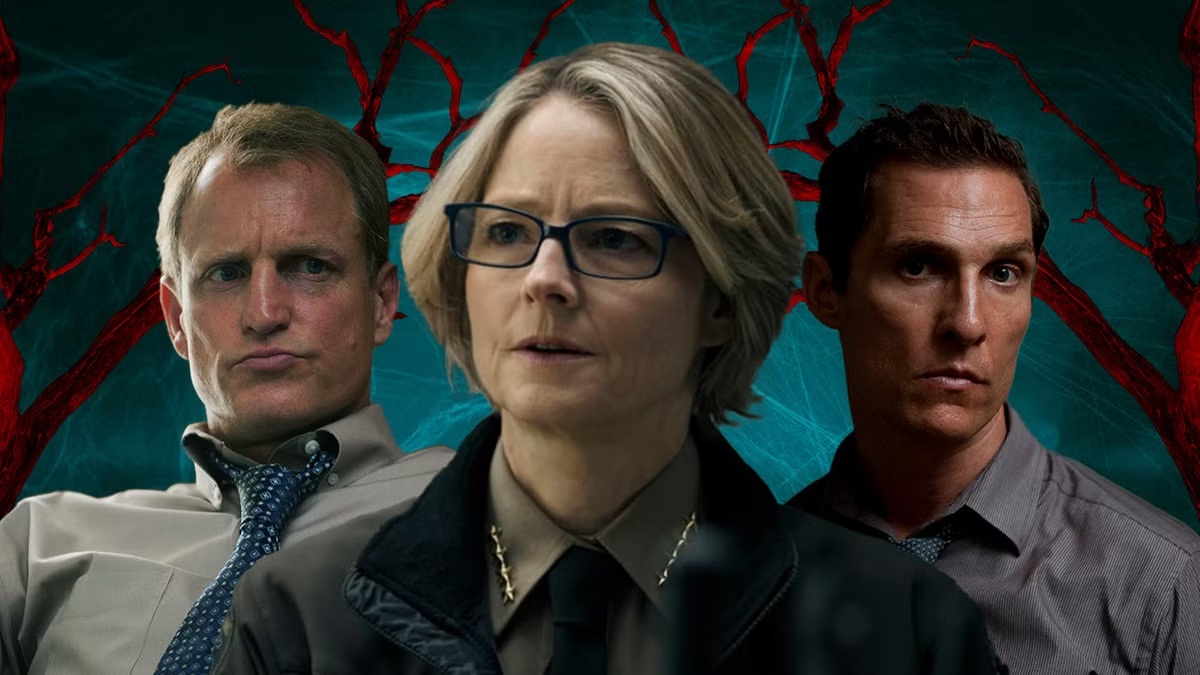
TRUE DETECTIVE — SEASON 5 (2026) delivers a haunting, slow-burning descent into moral ambiguity and psychological decay, returning the series to its most unsettling roots while pushing its thematic boundaries even further. Set against a stark, wind-lashed coastal landscape where the sea seems to whisper secrets older than memory itself, the season opens with a disappearance so ordinary it feels almost forgettable—until it isn’t. From that moment on, the narrative tightens like a vice, pulling viewers into a suffocating web of buried truths, fractured identities, and the quiet horror of human nature left unchecked.
What makes this season immediately gripping is its commitment to atmosphere over spectacle. The cinematography lingers on empty spaces—abandoned piers, dimly lit motels, fog-drenched highways—creating a sense that something is always just out of frame, watching. The environment becomes a character in its own right, reflecting the internal desolation of those who inhabit it. Every shot feels deliberate, almost oppressive, as if the world itself is complicit in the darkness unfolding.

At the center of the story are two deeply flawed investigators whose partnership feels less like a choice and more like a sentence. Their dynamic is volatile, built on clashing philosophies and unresolved personal trauma. One is methodical, almost detached, masking pain behind cold logic, while the other is impulsive, driven by instinct and a simmering rage that threatens to boil over at any moment. Together, they form a fragile balance that constantly teeters on collapse, making every interaction charged with tension.
The writing this season is particularly sharp, weaving philosophical undertones seamlessly into the dialogue without ever feeling forced. Conversations drift into existential territory, exploring themes of fate, guilt, and the cyclical nature of violence. There’s a lingering question throughout: are these characters chasing justice, or are they simply trying to outrun themselves? The script never offers easy answers, instead inviting viewers to sit with the discomfort.
As the investigation deepens, the narrative structure begins to fracture in fascinating ways. Timelines blur, memories become unreliable, and the line between reality and perception starts to dissolve. Flashbacks are not just tools for exposition but emotional landmines, revealing pieces of the puzzle while simultaneously destabilizing everything we think we know. It’s a storytelling approach that demands attention, rewarding those willing to engage with its complexity.
The antagonistic force in this season is particularly chilling because it rarely presents itself directly. Instead, it exists as a presence—felt more than seen—manifesting through symbols, whispers, and the unsettling behavior of those touched by it. This ambiguity makes the threat feel pervasive and inescapable, as if the true enemy is not a person, but an idea that has taken root and spread.

Character development is where the season truly excels. Each individual, no matter how minor, is given depth and nuance, their lives intersecting with the central mystery in ways that feel organic and often tragic. There are no clear heroes or villains here, only people shaped by circumstance, making choices that ripple outward with devastating consequences. This moral grayness adds layers to the story, forcing viewers to question their own perceptions of right and wrong.
Midway through the season, the pacing shifts, accelerating just enough to heighten the sense of urgency without sacrificing the slow-burn tension that defines the series. Revelations come in waves, each one more unsettling than the last, peeling back layers of deception to reveal something far more disturbing beneath. It becomes clear that this is not just a case to be solved, but a descent into something far darker.
The emotional weight of the story is amplified by its performances, which feel raw and unfiltered. Every glance, every hesitation, every outburst carries meaning, drawing viewers deeper into the characters’ internal struggles. There’s a palpable sense of exhaustion in their journey, as if the pursuit of truth is slowly eroding what little remains of their humanity.
As the narrative approaches its climax, the tension becomes almost unbearable. The pieces finally begin to align, but instead of clarity, they bring a deeper sense of dread. The truth, when it emerges, is not cathartic but devastating, challenging the very notion of closure. It’s a bold choice, refusing to provide the kind of resolution audiences might expect, and instead leaving them with something far more lingering.

The final moments of the season are hauntingly ambiguous, echoing long after the screen fades to black. There’s a sense that the story doesn’t truly end, that its impact will continue to reverberate beyond what we’ve seen. It’s a conclusion that feels both inevitable and incomplete, capturing the essence of the series’ core philosophy: that some mysteries are not meant to be solved, only endured.
Ultimately, TRUE DETECTIVE — SEASON 5 (2026) stands as a powerful, unsettling exploration of darkness in all its forms—external, internal, and everything in between. It refuses to comfort, choosing instead to confront, challenge, and linger in the shadows where most stories fear to tread. This is not just a crime drama; it’s a psychological journey that demands patience, attention, and a willingness to face the uncomfortable truths it lays bare