
🎬 SILENT HOSPITAL (2026)
There are stories that speak loudly through chaos and spectacle—and then there are stories like Silent Hospital (2026), which choose instead to whisper, slowly drawing you into a world where silence itself becomes the most unsettling sound of all. From its very first frame, the film establishes a tone that is both restrained and deeply unnerving, proving that fear does not always need volume to be effective—it only needs presence.
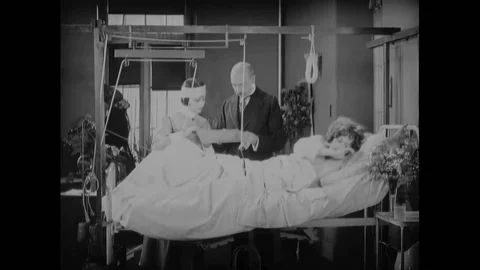
Set within the cold, dim corridors of an isolated medical facility, the film builds its atmosphere with remarkable precision. The hospital is not just a setting; it feels like a character in its own right—watching, waiting, and somehow aware. Every flickering light, every distant echo, every unopened door contributes to a growing sense that something is deeply wrong, even when nothing is explicitly shown.

At the center of the story is a protagonist who arrives with purpose but quickly finds themselves entangled in something far beyond logic. Their journey is not one of immediate terror, but of gradual realization. The film takes its time peeling back layers, allowing the audience to experience confusion, doubt, and fear alongside them. This slow unraveling is one of the film’s greatest strengths.
What makes Silent Hospital particularly compelling is its commitment to restraint. Instead of relying on predictable shocks, it leans into psychological tension. Silence becomes a tool—sometimes comforting, often suffocating. Moments without dialogue stretch just long enough to make you question what you’re not hearing, creating an experience that feels intensely personal and immersive.

Visually, the film embraces minimalism in a way that enhances its emotional impact. The color palette is muted, dominated by sterile whites and shadowy grays, reinforcing the sense of isolation. The camera lingers in places it shouldn’t, holding shots a beat longer than expected, forcing the viewer to confront the stillness rather than escape it.
The performances anchor the film with a quiet intensity. The lead actor delivers a portrayal that is subtle yet deeply expressive, relying more on small gestures and shifting expressions than dramatic outbursts. It’s a performance that demands attention, rewarding viewers who are willing to look closely and read between the lines.

Supporting characters are used sparingly, but effectively. Each one adds a new layer of mystery, never fully revealing their intentions or understanding of the situation. Their presence raises more questions than answers, contributing to the film’s overall sense of unease. No one feels entirely trustworthy, and that uncertainty lingers throughout.
Sound design plays a crucial role in shaping the film’s identity. Ironically, it is the absence of sound that resonates the most. The faint hum of machinery, the distant echo of footsteps, the subtle creak of unseen movement—these elements are carefully orchestrated to keep the audience on edge. When sound does break through, it feels significant, almost intrusive.
Thematically, Silent Hospital explores ideas of memory, guilt, and the boundaries between reality and perception. It challenges the viewer to consider how much of what we experience is shaped by our own fears and unresolved past. The hospital becomes a metaphorical space where these internal struggles manifest, blurring the line between psychological and physical threat.
Pacing is deliberately controlled, favoring a slow burn over rapid escalation. This may not appeal to everyone, but for those willing to engage with its rhythm, the payoff is worth it. The tension accumulates gradually, creating a sense of inevitability that makes the film’s later moments all the more impactful.

As the story approaches its climax, the film resists the urge to fully explain itself. Instead, it leaves room for interpretation, trusting the audience to piece together meaning from fragments. This ambiguity may frustrate some viewers, but it also gives the film a lasting quality—something to think about long after the credits roll.
By the end, Silent Hospital (2026) proves that silence can be more powerful than noise, and that fear often lies not in what we see, but in what we feel. It is a film that lingers quietly in the mind, unsettling not because it overwhelms, but because it refuses to fully reveal itself. And in that restraint, it finds its most haunting strength.