
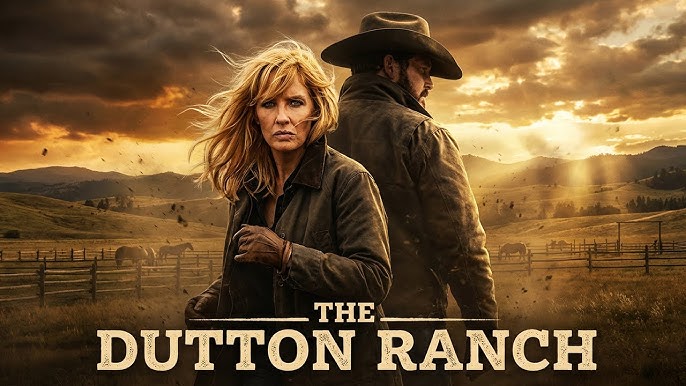
In a television landscape saturated with spin-offs, The Dutton Ranch: Beth & Rip’s Story Continues (2026) doesn’t just extend a legacy—it resurrects a storm. Set in the aftermath of Yellowstone’s brutal and emotionally fractured ending, the series plunges us back into a world where love is dangerous, loyalty is weaponized, and peace is nothing more than a fragile illusion. Beth Dutton and Rip Wheeler, once the most volatile yet magnetic force in Montana, now attempt to carve out a new life far from the ashes of the original Dutton empire. But if there’s one truth this universe never forgets, it’s that the past doesn’t stay buried—it festers, it hunts, and eventually, it bleeds its way back to the surface.
The narrative wastes no time reestablishing its tone: raw, unfiltered, and relentlessly tense. From the moment Beth steps onto their new land—this time in the harsh, unpredictable terrain of Texas—you can feel the weight of everything she’s done pressing against her psyche. Rip, quieter but no less dangerous, becomes the emotional anchor, yet even he cannot outrun the violence that shaped him. Together, they are no longer just survivors of a broken dynasty—they are architects of something new, something fragile, something constantly on the brink of collapse. Their relationship, always forged in fire, now evolves into something deeper, more haunting—a love that feels less like salvation and more like mutual destruction wrapped in devotion.
What makes this continuation so compelling is its refusal to romanticize the cowboy life. The ranch is not a sanctuary—it is a battlefield. Every acre of land they fight to protect carries a cost, and every decision echoes with moral ambiguity. Rival ranchers, corporate interests, and buried enemies begin to close in, turning this supposed fresh start into a war zone. The show masterfully blends quiet, introspective moments—where Beth confronts her own identity beyond revenge—with explosive sequences of violence that remind us exactly who she and Rip truly are. The tension never dips; it coils tighter with every episode, daring you to look away—and making it impossible to do so.
Carter’s presence adds a new emotional dimension, transforming the story from one purely about survival into one about legacy. As Beth and Rip attempt to guide him, we see glimpses of something unfamiliar in them—responsibility, even tenderness—but it’s always shadowed by the fear that they may pass down not wisdom, but darkness. The show subtly asks a chilling question: can people like Beth and Rip ever truly build something better, or are they doomed to recreate the same cycle of violence that defined the Dutton name? It’s this emotional conflict, layered beneath the grit and gunfire, that gives the series its haunting depth.

Visually, the series remains breathtaking—wide, unforgiving landscapes juxtaposed with intimate, suffocating close-ups that capture every flicker of emotion. The direction leans into contrasts: beauty and brutality, silence and chaos, love and vengeance. The writing, sharp and unapologetic, retains the signature tone fans expect while pushing the characters into darker, more introspective territory. There’s a sense that this isn’t just a continuation—it’s a reckoning. Every scene feels like it’s building toward something inevitable, something devastating.
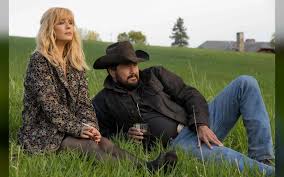
Ultimately, The Dutton Ranch: Beth & Rip’s Story Continues is not about redemption—it’s about consequence. It dares to explore what happens after the dust settles, after the empire falls, after the blood has been spilled. And in doing so, it delivers a story that is as gripping as it is unsettling. This isn’t just another chapter in the Dutton saga—it’s the echo of everything that came before, louder, darker, and far more dangerous.
https://www.youtube.com/watch?v=bw_BmlgMi7M