
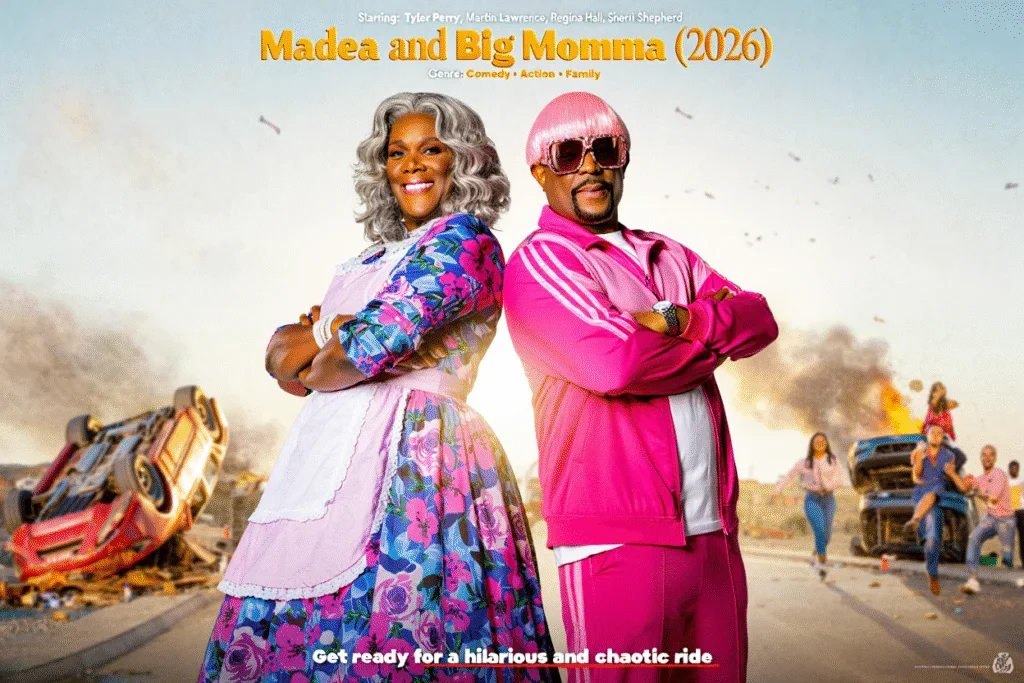
Madea and Big Momma (2026) explodes onto the screen like a long-awaited comedy crossover event that feels both wildly chaotic and irresistibly nostalgic, bringing together two of the most iconic larger-than-life matriarch personas in modern comedy. The film opens with a high-stakes undercover operation gone wrong, forcing FBI agent Malcolm Turner to once again step into his legendary disguise as Big Momma. What begins as a routine mission to protect a key witness quickly spirals into madness when his supposed “safe house” turns out to be the one place no criminal, cop, or common sense has ever survived peacefully — Madea’s house. From the very first encounter, the clash between Madea’s unapologetic authority and Big Momma’s calculated undercover persona sets the tone for a comedy that thrives on personality warfare rather than simple slapstick.

As the story unfolds, the house itself becomes a battleground of egos, secrets, and explosive humor. Madea, suspicious of the overly polite “new church lady” in her territory, begins conducting her own investigation in the most unorthodox ways possible, while Malcolm struggles to maintain his disguise under relentless scrutiny. The brilliance of the narrative lies in how it blends crime-comedy tension with domestic chaos, turning everyday situations — dinner, prayer meetings, neighborhood gossip — into comedic interrogation arenas. Every interaction crackles with layered humor, as the two disguises represent completely different philosophies: Madea’s raw, confrontational wisdom versus Big Momma’s strategic, undercover patience.

Midway through the film, the stakes escalate when the hidden witness becomes the target of a dangerous criminal syndicate that tracks them to the neighborhood, forcing the unlikely duo into an alliance neither of them wants. The screenplay cleverly shifts from pure comedy to a fast-paced action-comedy rhythm, where absurd disguises, mistaken identities, and undercover mishaps stack on top of one another in increasingly outrageous fashion. Watching Madea weaponize household objects like tools of justice while Big Momma tries to follow FBI protocol creates a dynamic that is both hilarious and oddly compelling, proving that the humor is deeply rooted in character contrast rather than random gags.

Emotion surprisingly anchors the second half of the film, as layers peel back to reveal the loneliness and burden both characters hide behind their exaggerated personas. Beneath the loud jokes and explosive arguments, the film explores themes of identity, legacy, and the masks people wear to survive their worlds. Madea’s blunt life lessons collide with Malcolm’s internal struggle about living behind disguises, creating moments of heartfelt sincerity that elevate the narrative beyond a typical crossover comedy. These emotional beats are woven seamlessly into the humor, ensuring the tone never loses its energy while still delivering unexpected depth.

The climax is a gloriously chaotic spectacle, combining undercover infiltration, neighborhood showdowns, and one of the most outrageous church-set finales imaginable. In a sequence packed with disguises within disguises, dramatic reveals, and rapid-fire comedic confrontations, the film reaches peak absurdity while still maintaining narrative coherence. The chemistry between the two leads drives every scene, turning even the simplest dialogue exchange into a comedic duel filled with sarcasm, attitude, and explosive punchlines that feel earned rather than forced.

By the time the credits roll, Madea and Big Momma (2026) stands as a bold, high-energy crossover that celebrates the legacy of both characters while reinventing them in a fresh, unpredictable story. It is loud, chaotic, heartfelt, and unapologetically entertaining — a film that leans fully into its ridiculous premise and transforms it into a wildly engaging ride. Instead of relying solely on nostalgia, it builds a narrative that feels bigger, funnier, and more emotionally layered than expected, leaving audiences with the sense that this outrageous collision of comedy icons was not just a gimmick, but a full-scale cinematic event packed with personality, humor, and unforgettable comedic chaos.