
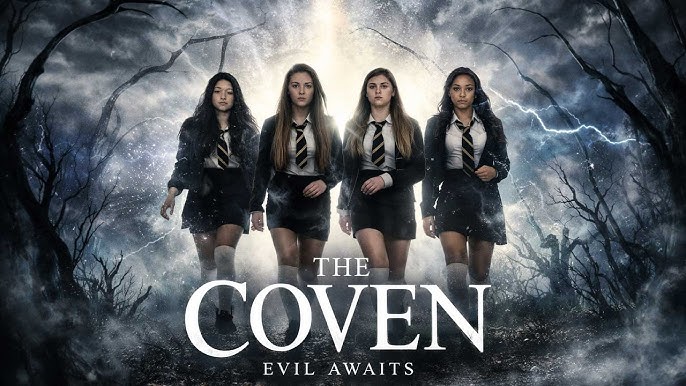
𝐓𝐇𝐄 𝐂𝐎𝐕𝐄𝐍 𝐎𝐅 𝐁𝐋𝐀𝐂𝐊 𝐇𝐎𝐋𝐋𝐎𝐖 (𝟐𝟎𝟐𝟔)
The Coven of Black Hollow is the kind of folk-horror film that crawls under your skin rather than relying on cheap scares. Set in an isolated Appalachian town shrouded in centuries of superstition, the story follows investigative journalist Evelyn Ward, who arrives in Black Hollow after a string of unexplained disappearances. What begins as a routine investigation soon unravels into a terrifying descent into witchcraft, blood rituals, and a secret coven that has silently controlled the town for generations. As Evelyn digs deeper into the town’s dark history, she discovers that the line between myth and reality is far thinner than anyone imagined, and that the true horror may not be the witches themselves, but the community that willingly protects them.
The film excels in creating an atmosphere of relentless dread. Every frame feels soaked in mist, decay, and ancient evil. The dense forests surrounding Black Hollow become characters of their own, hiding secrets beneath twisted branches and moonlit fog. Director Sarah Whitmore embraces a slow-burn approach, allowing tension to build naturally through unsettling imagery, cryptic folklore, and a constant sense that something is watching from the darkness. Rather than overwhelming viewers with jump scares, the film weaponizes silence and uncertainty, creating a suffocating atmosphere reminiscent of modern horror classics that focus on psychological unease and occult terror. The haunting cinematography captures the beauty and menace of the wilderness with equal effectiveness, making Black Hollow feel both mesmerizing and deeply threatening.
At the center of the story is Evelyn, portrayed with remarkable emotional depth. Her transformation from a skeptical outsider into someone confronting forces beyond comprehension serves as the emotional backbone of the film. As she uncovers hidden journals, forbidden rituals, and connections to her own family’s past, the mystery becomes increasingly personal. The supporting cast is equally compelling, particularly the enigmatic coven leader, Mother Agnes, whose calm demeanor masks a terrifying level of power. She is never portrayed as a conventional villain; instead, she embodies the film’s central theme that power, belief, and survival often exist in morally ambiguous territory.
One of the movie’s greatest strengths is its world-building. The mythology surrounding Black Hollow feels authentic and lived-in, drawing inspiration from colonial folklore, pagan traditions, and local legends. Every ritual, symbol, and whispered tale contributes to a larger narrative tapestry that rewards attentive viewers. The screenplay carefully balances supernatural horror with human drama, exploring themes of generational trauma, religious extremism, fear of outsiders, and the sacrifices communities make to preserve their identity. These layers elevate the story beyond a standard witchcraft thriller and give the horror genuine emotional weight.
Visually, the film is stunning. Candlelit ceremonies hidden deep within ancient forests, abandoned churches swallowed by nature, and dreamlike visions of forgotten gods create some of the most memorable imagery in recent horror cinema. The practical effects are particularly impressive, grounding the supernatural elements in tangible reality. Combined with an eerie orchestral score that blends choral chants with unsettling ambient sounds, the result is a sensory experience that lingers long after the credits roll.
The final act delivers an intense and emotionally charged climax that avoids easy answers. Rather than providing a neat resolution, the ending embraces ambiguity and leaves viewers questioning whether evil was ever truly defeated. The closing scenes are haunting, thought-provoking, and likely to spark discussion among horror fans for years to come.
Overall, The Coven of Black Hollow is a masterfully crafted folk-horror experience that prioritizes atmosphere, mythology, and psychological terror over conventional scares. It is a dark, intelligent, and deeply unsettling journey into the heart of superstition and human fear. For fans of slow-burning occult horror, this film stands as one of the most memorable and chilling genre entries of 2026, delivering a nightmare that feels both ancient and disturbingly relevant. ★★★★½/★★★★★.