
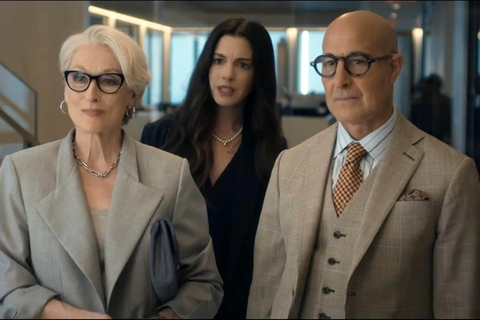
Nearly two decades after the iconic heels first clicked across the marble floors of Runway, The Devil Wears Prada 2 (2026) returns with a sharper, colder, and far more emotionally complex edge—transforming what was once a witty satire into a layered exploration of power, legacy, and survival in an industry that no longer plays by the same rules. The film wastes no time reintroducing the audience to a world that feels both familiar and unsettlingly evolved, where glossy magazine covers are no longer enough to maintain influence, and where even legends like Miranda Priestly must confront the terrifying possibility of irrelevance.
From its opening moments, the film establishes a tone of quiet tension rather than flamboyant comedy, placing Miranda at the center of a crumbling empire. Runway magazine, once the undisputed bible of fashion, now teeters on the edge of collapse as digital platforms dominate the landscape. The brilliance of the narrative lies in how it mirrors real-world shifts—print fading, influence fragmenting, and authority being questioned—while still maintaining the razor-sharp dialogue that made the original unforgettable.

Anne Hathaway’s return as Andy Sachs feels less like a nostalgic callback and more like a reinvention of identity. No longer the wide-eyed assistant, Andy emerges as a seasoned editor navigating her own moral ambiguity. Her decision to return to Runway is not driven by ambition alone, but by a complicated mix of unfinished business, loyalty, and curiosity about whether the woman who once shaped her life still holds the same power. This internal conflict becomes one of the film’s emotional anchors, giving depth to a character who once served primarily as the audience’s lens.
But it is the dynamic between Andy and Miranda that elevates the sequel into something far more compelling than expected. Their relationship evolves from mentor-versus-protégé into something almost symbiotic—two women shaped by the same brutal system, now forced to confront what they have become. Miranda, portrayed once again with chilling precision, is no longer just the “devil” in designer heels; she is a relic fighting extinction, a titan realizing that control is slipping through her perfectly manicured fingers.
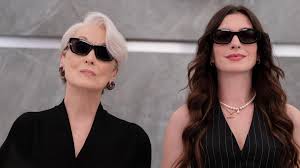
The introduction of Emily Charlton as a powerful executive adds a thrilling layer of tension, transforming the narrative into a high-stakes corporate chess match. Once the overworked assistant desperate for Miranda’s approval, Emily now stands as a formidable rival, holding the financial lifeline that could either save or destroy Runway. This role reversal is handled with delicious irony, as the film subtly questions whether anyone truly escapes the system—or simply becomes its next architect.
Visually, the film is nothing short of hypnotic. From the bustling streets of New York to the opulent runways of Milan, every frame is drenched in elegance and precision. Yet beneath the surface glamour lies a deliberate coldness—muted tones, controlled lighting, and an almost sterile aesthetic that reflects the emotional isolation of its characters. Fashion is no longer just spectacle; it becomes armor, identity, and, at times, a prison.

One of the film’s greatest strengths is its willingness to slow down and explore the cost of ambition. Characters are given space to breathe, to doubt, to fracture. Nigel’s presence, as always, provides both warmth and bittersweet honesty, serving as a reminder of what is sacrificed in the pursuit of greatness. His interactions with Andy and Miranda subtly underline the film’s central question: what is success worth when it demands everything in return?
The screenplay cleverly balances nostalgia with progression, weaving callbacks to the original film into a narrative that feels distinctly modern. References are never overindulgent; instead, they act as emotional echoes, reminding viewers of how far these characters have come—and how little has truly changed beneath the surface. The iconic wit is still there, but it is now laced with a sense of melancholy that gives the dialogue a sharper, more resonant impact.
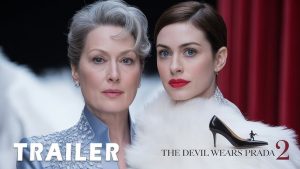
What makes this sequel particularly compelling is its thematic maturity. It doesn’t attempt to replicate the charm of the original; instead, it interrogates it. The glamorous fantasy of the fashion world is stripped back to reveal the machinery underneath—ruthless, demanding, and constantly evolving. In doing so, the film speaks not just to fans of the original, but to anyone navigating a world where relevance is fleeting and reinvention is survival.
The pacing builds toward a climax that feels less like a dramatic explosion and more like an inevitable reckoning. Alliances shift, truths surface, and the characters are forced to confront choices that define not just their careers, but their identities. The resolution avoids easy answers, opting instead for a bittersweet sense of continuity—because in this world, endings are simply transitions into the next battle.

Performance-wise, the cast delivers across the board, but it is the quiet moments that linger the longest: a glance from Miranda that reveals vulnerability beneath control, a hesitation in Andy’s voice that hints at lingering doubt, a smirk from Emily that carries both triumph and unresolved history. These nuances elevate the film beyond its genre, turning it into a character study disguised as a fashion drama.
Ultimately, The Devil Wears Prada 2 is not just a sequel—it is a reflection on time, change, and the price of staying on top. It understands that the real story was never about clothes, but about power, identity, and the invisible lines we cross in pursuit of success. And as the credits roll, one thing becomes clear: the devil didn’t just return—she evolved, adapted, and proved that even in a world that moves on, some forces refuse to fade.