
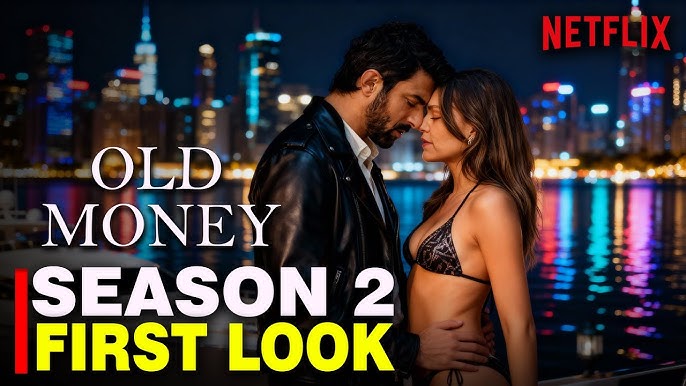
🎬 OLD MONEY — SEASON 2 (2026)
If Season 1 of Old Money carefully opened the doors to a world built on legacy, privilege, and quiet manipulation, then Season 2 walks boldly inside and begins rearranging the furniture. This is no longer just a story about inherited wealth—it’s about the invisible structures that sustain it, the cracks forming beneath it, and the people willing to either protect or dismantle it. The second season arrives with sharper intent, deeper emotional stakes, and a far more intoxicating sense of danger.
From its opening moments, the series reestablishes its signature tone: restrained, elegant, yet constantly simmering beneath the surface. The opulent estates, polished social gatherings, and curated appearances remain intact, but there’s a noticeable shift in atmosphere. Something feels off—like a perfect painting beginning to fade. The world of Old Money hasn’t collapsed, but it’s undeniably starting to tremble.

At the heart of this season is a more fractured and introspective protagonist. No longer content with merely navigating elite circles, they begin to question their place within them. Their journey is less about ambition now and more about identity—what it means to belong to a system built on history, and whether one can ever truly escape its influence. The writing allows space for internal conflict, giving the character a depth that feels both raw and compelling.
The narrative expands outward, introducing new players who disrupt the established order. These characters are not simply outsiders—they are catalysts. Each one brings a different perspective on wealth, power, and legacy, forcing the old guard to confront ideas they’ve long ignored. The tension between tradition and change becomes the driving force of the season, and it’s handled with remarkable subtlety.

What makes Season 2 particularly engaging is its refusal to paint wealth in simple terms. It neither glorifies nor outright condemns it. Instead, it dissects it—examining how it shapes relationships, influences morality, and defines personal worth. The show asks difficult questions: Is legacy a burden or a privilege? Can power exist without corruption? And perhaps most importantly, who gets to decide?
Visually, the series remains stunning, but there’s a new layer of symbolism woven into its imagery. Grand interiors feel colder, more isolating. Wide shots emphasize distance rather than grandeur. Even the lighting seems more deliberate, casting shadows where there were once none. It’s as if the aesthetic itself is evolving to reflect the emotional and psychological shifts of the characters.

The supporting cast is given far more room to breathe this season, and the result is a richer, more interconnected narrative. Each character operates with their own agenda, often clashing with others in ways that feel organic rather than forced. Alliances are fragile, and loyalty is constantly tested. No relationship feels entirely secure, which adds a persistent sense of unpredictability.
Romantic subplots, while present, are handled with restraint and complexity. Love in Old Money is never separate from power—it is influenced by it, shaped by it, and sometimes weaponized through it. The series avoids clichés, opting instead for relationships that feel layered and, at times, uncomfortable in their honesty. It’s not about idealized romance, but about emotional negotiation within unequal dynamics.

The pacing of Season 2 is deliberate, almost methodical. It allows moments to linger, conversations to unfold, and tension to build gradually. While this may feel slow to some, it ultimately serves the story’s depth. When major developments occur, they land with greater impact because of the careful groundwork laid beforehand.
One of the season’s greatest strengths lies in its dialogue. Conversations are rarely straightforward; they are filled with subtext, implication, and unspoken meaning. A simple exchange over dinner can carry more weight than a dramatic confrontation. This layered writing rewards attentive viewers, encouraging them to read between the lines and engage more deeply with the story.

As the season progresses, the sense of inevitability grows stronger. Choices made earlier begin to ripple outward, affecting not just individuals but entire networks of relationships. The narrative tightens, pulling characters toward moments of confrontation that feel both surprising and completely earned. There’s a quiet intensity to it all, as if everything has been building toward something unavoidable.
By the final episode, Old Money — Season 2 leaves a lasting impression that lingers well beyond its closing scene. It doesn’t offer easy resolutions or neat conclusions. Instead, it presents a world in transition—uncertain, unstable, and deeply human. This season doesn’t just expand the story; it deepens it, challenging both its characters and its audience to reconsider what wealth truly means. And in doing so, it proves that the real power of Old Money lies not in what is inherited, but in what is questioned.
https://www.youtube.com/watch?v=i573cfvvwPk