
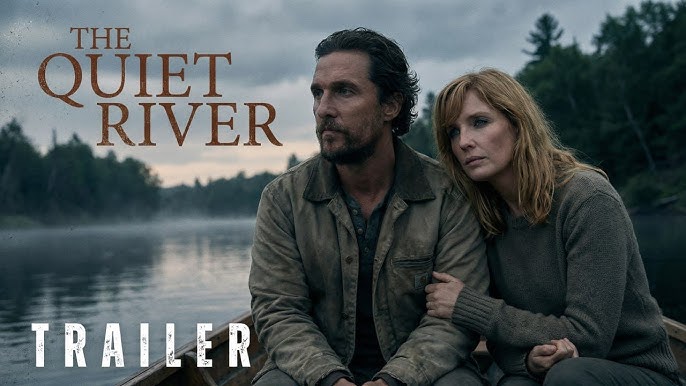
The Quiet River (2026) unfolds like a slow, haunting whisper carried across an endless landscape, drawing viewers into a world where silence speaks louder than words and the past refuses to stay buried. Set against the vast, unforgiving beauty of the American West, the film follows a solitary rancher—portrayed with striking emotional restraint—who lives in quiet exile, clinging to routine as a way to outrun a tragedy that has hollowed him from within. The river beside his land is more than scenery; it is memory, guilt, and time itself, flowing steadily as if it alone remembers the truth he tries so desperately to forget.

As the story unfolds, the fragile stillness of his life is disrupted by the arrival of his estranged wife, a woman equally burdened by grief but hardened by years of unresolved anger. Their reunion is not explosive but suffocating—filled with pauses, glances, and the weight of everything left unsaid. The film masterfully avoids melodrama, instead choosing a restrained, almost poetic approach where emotion simmers beneath the surface. Every interaction between them feels like a step closer to a truth neither is ready to confront, yet both know is inevitable.

What makes The Quiet River so compelling is its use of the natural world as a living metaphor. As drought slowly drains the river, long-buried remnants begin to surface—both literally and emotionally—forcing the characters into a reckoning they can no longer avoid. The landscape itself becomes a silent witness to their pain, its emptiness mirroring their isolation, its vastness amplifying the distance between who they were and who they have become. The film’s pacing may feel deliberate, even slow, but it is precisely this patience that allows every detail to breathe and resonate.

At the same time, a looming external threat emerges in the form of corporate greed, with a ruthless developer seeking to claim the land and reshape it into something unrecognizable. This conflict elevates the story beyond personal tragedy, introducing a broader tension between preservation and progress. The rancher’s fight to protect his land becomes symbolic of a deeper struggle—to hold onto identity, memory, and meaning in a world that constantly demands change. The stakes rise not through action, but through the quiet realization that losing the land would mean losing the last piece of himself.

Visually, the film is breathtaking. Golden sunsets stretch endlessly over barren plains, while the river glimmers like a fragile thread connecting past and present. The cinematography lingers just long enough to make every frame feel meditative, almost hypnotic, reinforcing the film’s central themes of stillness and introspection. There is an almost spiritual quality to the imagery, as if the land itself holds answers the characters are too broken to articulate.

By the time the film reaches its final moments, The Quiet River refuses to offer easy closure. There are no grand resolutions, no sweeping declarations—only a quiet, aching acceptance that some wounds never fully heal. Instead, the film leaves audiences with a lingering question about forgiveness, memory, and the cost of silence. It is a deeply introspective, emotionally resonant experience—one that doesn’t demand attention through spectacle, but earns it through honesty, atmosphere, and the haunting power of what remains unspoken.
https://www.youtube.com/watch?v=1YdGrxEJcIY